




.png)


HepatoAdvanced® for Large Dogs
Overview
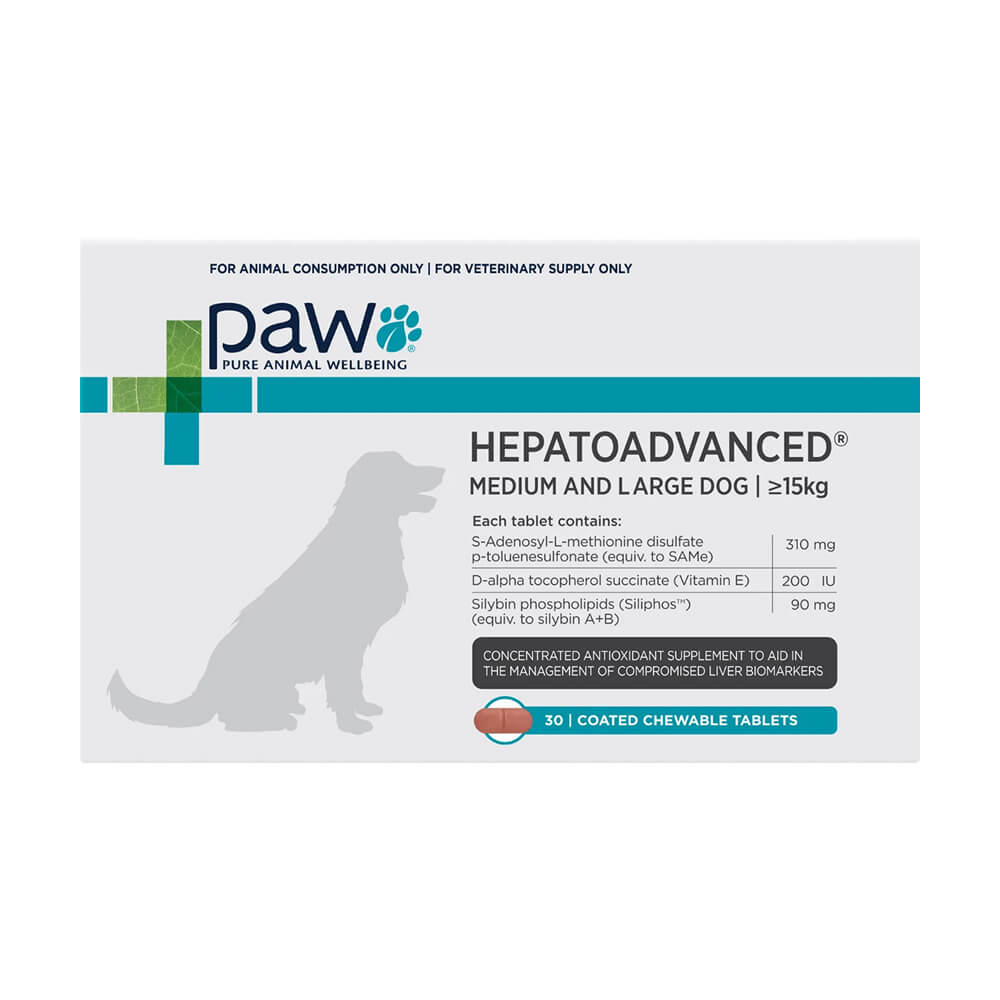
PAW HepatoAdvanced® for Large Dogs is an Australian-made chewable antioxidant tablet for medium and large dogs requiring liver health support. SAMe, silybin via Siliphos® (a high-bioavailability silybin-phosphatidylcholine complex) and vitamin E support liver detoxification, antioxidant activity and brain health. May help protect against hepatotoxic effects of certain medications. Available exclusively through veterinary clinics. Give once daily on an empty stomach.
Ingredients
S-Adenosyl-L-Methionine Disulfate P-Toluenesulfonate, D-Alpha Tocopherol Succinate (Vitamin E), Silybin Phospholipids (Siliphos®), Flavour, Tablet Diluents, Binders, Lubricants.

S-Adenosylmethionine, S-Adenosyl-L-Methionine, SAMe, Ademetionine
S-adenosylmethionine (SAMe) is a compound formed from the amino acid methionine and adenosine triphosphate (ATP), commonly used as a supplement in veterinary medicine. In dog food, it is typically supplied as the stabilised salt S-adenosylmethionine tosylate disulfate (SAMe-ST) to ensure shelf stability and bioavailability. SAMe-ST supports liver function by participating in methylation reactions and promoting the synthesis of glutathione, an important antioxidant. When included at appropriate levels, it may help maintain normal liver health in dogs; however, excessive intake can cause gastrointestinal upset or interact with certain medications.
SAMe is included in dog food formulations primarily for its potential to support liver health in dogs, while also offering manufacturers a way to differentiate premium or therapeutic diets in the Australian market. Its use is targeted and not for cost-saving or filler purposes.
D-Alpha Tocopheryl Succinate, RRR-Alpha Tocopheryl Succinate, All-Trans-Alpha Tocopheryl Succinate, E307
Alpha tocopherol succinate is a synthetic ester form of vitamin E, created by combining alpha tocopherol with succinic acid. In dog food manufacturing, it is used in this esterified form rather than as raw alpha tocopherol. It functions primarily as an antioxidant, helping to protect fats and oils in the food from oxidation and spoilage. When included at appropriate levels, it contributes to the stability of the product and supports vitamin E requirements in dogs, with no known risks at standard inclusion rates.
Alpha tocopherol succinate is included by manufacturers primarily as a stabilised form of vitamin E to preserve the freshness of fats and oils in dog food, thereby extending shelf life and maintaining product quality. This also provides a source of vitamin E for dogs, supporting their nutritional needs while offering processing advantages for the manufacturer.
Polyphosphate Crystals, Silicate-Phosphate Crystals, Phosphate-Silicate Crystals, Silicate-Phosphate Compound
Siliphos® is a proprietary blend of sodium polyphosphate and silica, commonly used as a water treatment additive to prevent scale formation and corrosion. In dog food manufacturing, it is not used in its raw form but is incorporated as a stabilised compound under the Siliphos® brand. Its primary function in pet food is as a preservative and anti-caking agent, helping to maintain product texture and shelf life. When used within regulated limits, Siliphos® is considered safe, with no known adverse effects reported in dogs.
Siliphos® is included in dog food formulations primarily as a preservative to extend shelf life and prevent spoilage, offering manufacturers processing and storage advantages without providing direct nutritional benefits to dogs.

Flavouring, Flavouring Substance, Flavouring Agent, Flavouring Preparation
Flavours are additives derived from various sources, including animal, plant, or synthetic origins, designed to enhance the palatability of pet food. Their primary purpose is to improve taste and encourage consistent consumption. Flavours are not used in their natural, raw state; instead, they are formulated as specific compounds or extracts to ensure safety, stability, and uniformity in pet food products.
Flavours are included to enhance palatability, encouraging pets to consume the product. They also allow manufacturers to maintain consistent taste profiles despite variations in raw ingredient quality.
Direct Compression Agents, Tablet Fillers, Tablet Bulking Agents, Tablet Excipients
Tablet diluents are inert substances added to dog food tablets to increase bulk and ensure accurate dosing of active ingredients. Common diluents used in pet food manufacturing include microcrystalline cellulose, lactose, and dicalcium phosphate. These compounds help create tablets of a manageable size and improve the consistency of the final product. When used at appropriate levels, tablet diluents are considered safe and do not contribute nutritional value or pose known health risks to dogs.
Tablet diluents are included in dog food formulations primarily to aid in the manufacturing process by ensuring tablets have the appropriate size, consistency, and stability, rather than providing direct nutritional benefits to dogs. Their use is mainly for processing efficiency and product uniformity.
Adhesives, Agglutinants, Cohesive Agents, Binding Agents
Binders are functional ingredients derived from various sources, including plant, animal, or synthetic origins, and are incorporated into pet food to improve texture and maintain kibble integrity. Their primary purpose is to hold ingredients together, preventing crumbling and ensuring consistent product quality. Binders are not used in their natural raw state; instead, specific compounds such as gums or starches are utilised for optimal safety and efficacy.
Binders are included to improve the texture and cohesiveness of pet food, ensuring that kibble or treats maintain their shape during processing and storage. They also help optimise production efficiency by reducing crumbling and waste.
Anti-Friction Agents, Emollients, Slip Agents, E900
Lubricants in dog food refer to substances added to aid in the processing and handling of ingredients, typically by reducing friction during manufacturing. They are not used in their raw form; common examples include food-grade mineral oil and certain vegetable oils. These compounds help ensure consistent mixing and prevent ingredients from sticking to equipment, supporting efficient production. When used at regulated levels, food-grade lubricants are considered safe, but excessive use may lead to digestive upset or interfere with nutrient absorption.
Lubricants are included in dog food formulations primarily to aid in the manufacturing process by reducing friction and preventing ingredients from sticking to equipment, which improves production efficiency but does not provide direct nutritional benefits to dogs.



PRODUCT TAGS
Most Tracked This Week












About the Brand


Comments
0 comments
Login to Join the Conversation 💬